

Secure and Reliable Managed IT Services in London
Cambridge, celebrated for its historic significance and dynamic technology sector, hosts numerous enterprises that depend on robust IT solutions to thrive and surpass competitors.
Key Takeaways
-IT solutions combine hardware, software, and services to address specific business technology challenges and improve operational efficiency
-Major types include cloud computing, cybersecurity, infrastructure management, communication systems, and technical support services
-Benefits include enhanced security, cost …

6 min sound summary:
In today’s rapidly evolving business landscape, technology isn’t just an advantage—it’s essential for survival. Modern businesses face increasingly complex challenges that require sophisticated technology solutions to streamline operations, enhance efficiency, and remain competitive in their respective industries. Whether you’re a small startup or an established enterprise, understanding IT solutions and their strategic implementation can be the difference between thriving and merely surviving.

The digital transformation has fundamentally changed how companies operate, communicate, and deliver value to their customers. From cloud services that enable remote work to artificial intelligence that automates routine tasks, IT solutions have become the backbone of successful business operations. This comprehensive guide will walk you through everything you need to know about IT solutions, helping you make informed decisions that drive business growth and deliver actionable insights for your organization.
Information technology solutions represent integrated packages of technology services, software, and hardware designed to solve specific business problems and address organizational challenges. Unlike standalone software products or individual hardware components, IT solutions combine multiple elements from different vendors to create comprehensive technology packages that deliver measurable business value.
At their core, IT solutions encompass everything from basic tech support and maintenance services to complex enterprise resource planning systems that manage entire business operations. These solutions companies work closely with clients to understand their specific needs and develop customized approaches that align with business goals and strategic planning objectives.
The fundamental difference between IT solutions and traditional technology purchases lies in their holistic approach. Instead of buying separate software products, hardware components, and services, businesses receive a complete package that includes implementation, training, ongoing support, and regular updates. This integrated approach ensures that all technology components work seamlessly together, reducing technical issues and maximizing operational efficiency.
For example, a comprehensive security solution might include antivirus software, firewalls, backup services, employee training, and 24/7 monitoring—all managed by a single provider. This approach eliminates the complexity of coordinating multiple vendors and ensures consistent service quality across all technology components.
IT solution providers play a crucial role in this ecosystem by serving as strategic partners rather than simple vendors. They analyze business requirements, design appropriate technology architectures, manage implementation projects, and provide ongoing technical support to ensure solutions continue delivering value over time.
The IT solutions landscape offers a diverse range of options designed to address different business technology challenges and requirements. Understanding these various types of IT solutions helps organizations make informed decisions about which technologies best support their operational needs and long-term strategic objectives.
Cloud services have revolutionized how businesses access and utilize technology resources, offering unprecedented flexibility and cost-effectiveness. Software as a Service (SaaS) solutions like Microsoft 365, Salesforce, and Google Workspace provide businesses with powerful applications accessible from anywhere with an internet connection, eliminating the need for on-premises software installations and reducing IT infrastructure requirements.
Infrastructure as a Service (IaaS) platforms, including Amazon Web Services, Microsoft Azure, and Google Cloud Platform, offer scalable computing resources that businesses can scale up or down based on demand. These cloud computing solutions enable organizations to access enterprise-level technology capabilities without the substantial capital investments traditionally required for data centers and server hardware.
Platform as a Service (PaaS) solutions provide development environments where businesses can build, test, and deploy custom applications without managing underlying infrastructure. This approach accelerates software development cycles and reduces the complexity of application deployment and management.
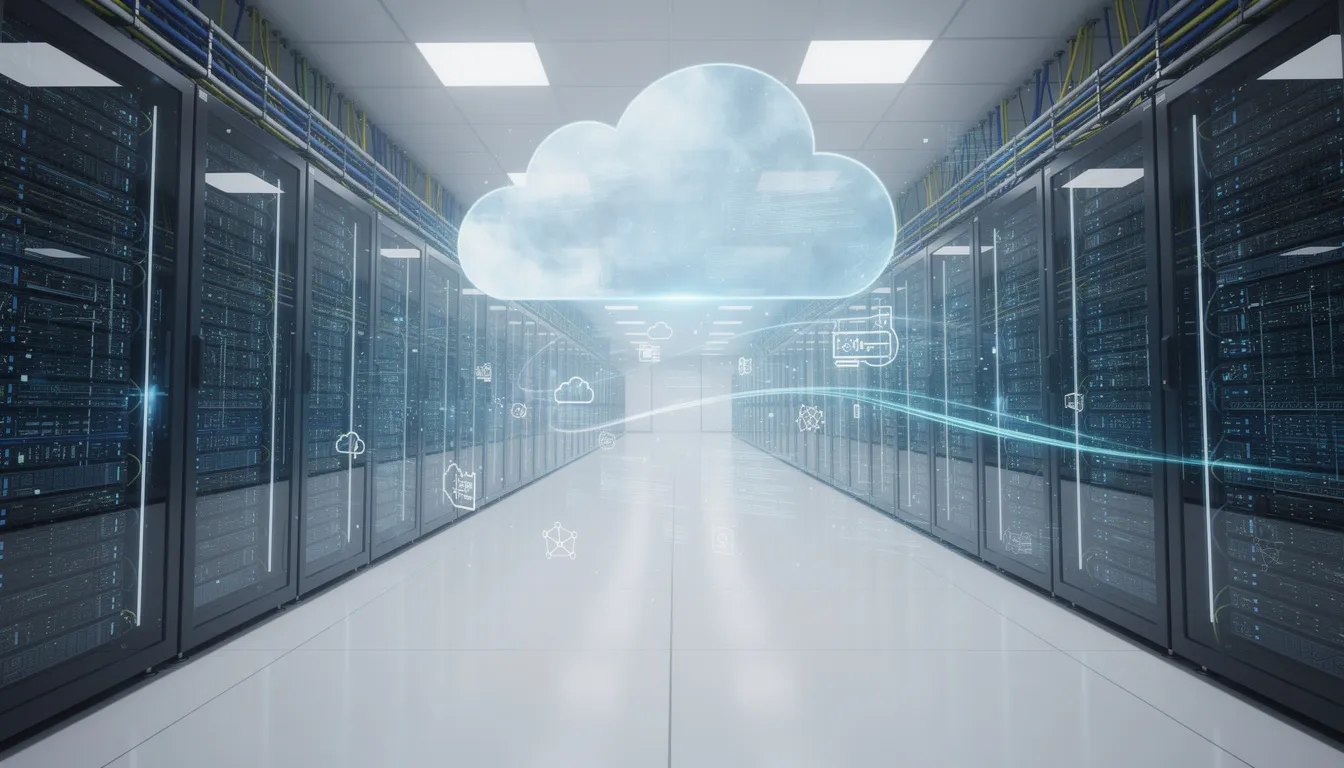
Hybrid cloud solutions combine on-premises and cloud infrastructure, allowing businesses to maintain sensitive data locally while leveraging cloud resources for less critical workloads. This approach provides the flexibility to optimize costs while meeting specific security and compliance requirements.
The benefits of cloud solutions extend beyond cost reduction to include improved scalability, enhanced collaboration capabilities, automatic software updates, and built-in disaster recovery features that protect digital assets and ensure business continuity.
Cyber threats have become one of the most significant risks facing modern businesses, making comprehensive cybersecurity solutions essential for protecting sensitive information and maintaining customer trust. Endpoint protection solutions provide the first line of defense, combining antivirus software, anti-malware tools, and device management capabilities to protect individual computers, mobile devices, and other endpoints connected to business networks.
Network security solutions create protective barriers around business infrastructure using firewalls, intrusion detection systems, and VPN services to monitor and control network traffic. These security mechanisms prevent unauthorized access and detect potential threats before they can compromise critical business systems.
Data protection solutions focus on safeguarding sensitive information through encryption, backup services, and disaster recovery planning. Regular automated backups ensure that businesses can quickly recover from data loss incidents, while encryption protects information both in transit and at rest.
Advanced cybersecurity solutions now include threat intelligence and monitoring services that provide 24/7 surveillance of business networks. These services use artificial intelligence and machine learning to identify unusual patterns and potential security breaches, enabling rapid response to cyber security threats.
Compliance solutions help businesses meet industry-specific regulations such as HIPAA for healthcare, PCI DSS for payment processing, and SOX for financial reporting. These specialized security frameworks ensure that businesses maintain appropriate controls and documentation to satisfy regulatory requirements.
Effective IT infrastructure forms the foundation of all business technology operations, requiring sophisticated management solutions to ensure optimal performance and reliability. Server management and monitoring solutions oversee both physical and virtual environments, tracking performance metrics, managing resource allocation, and identifying potential issues before they impact business operations.
Network administration tools provide comprehensive oversight of routers, switches, and network performance, ensuring reliable connectivity and optimal data flow throughout the organization. These tools help IT teams identify bottlenecks, plan capacity upgrades, and maintain network security.
Database management solutions, including MySQL, Oracle, and Microsoft SQL Server services, ensure that critical business data remains accessible, secure, and properly backed up. Professional database management includes performance tuning, security patching, and disaster recovery planning to protect valuable business information.
Virtualization solutions using platforms like VMware and Hyper-V enable businesses to maximize hardware utilization by running multiple virtual machines on single physical servers. This approach reduces hardware costs, improves resource efficiency, and simplifies disaster recovery planning.
Asset management systems provide comprehensive tracking of hardware inventory, software licenses, and equipment lifecycles. These systems help businesses optimize technology investments, ensure compliance with licensing agreements, and plan for future upgrades and replacements.
Modern business success depends heavily on effective communication and collaboration, making integrated communication solutions essential for team performance and customer relationship management. Unified communications platforms like Microsoft Teams, Slack, and Zoom combine messaging, video conferencing, file sharing, and project management tools into single, cohesive environments.
VoIP phone systems and call center solutions provide cost-effective alternatives to traditional phone systems while offering advanced features like call routing, voicemail-to-email, and detailed analytics. These systems integrate seamlessly with other business applications, enabling more efficient customer service and internal communication.
Email hosting and management services ensure reliable message delivery while providing robust spam filters and security features that protect against phishing attacks and malware. Professional email services also include archiving and compliance features required in many industries.

File sharing and document collaboration platforms enable teams to work together on projects regardless of location, supporting remote work initiatives and improving productivity. These solutions include version control, access permissions, and real-time editing capabilities that streamline collaborative workflows.
Project management tools integrated with communication systems provide comprehensive oversight of tasks, deadlines, and deliverables while maintaining clear communication channels among team members and stakeholders.
Enterprise resource planning systems represent some of the most comprehensive IT solutions available, integrating multiple business functions into unified platforms that provide real-time visibility across entire organizations. Leading ERP solutions like SAP, Oracle, and Microsoft Dynamics offer modules covering finance, operations, human resources, and customer management.
Industry-specific ERP solutions address unique requirements in manufacturing, retail, healthcare, and professional services sectors. These specialized systems include features and workflows designed specifically for industry best practices and regulatory compliance requirements.
Financial management modules provide comprehensive accounting, budgeting, and reporting capabilities that support accurate financial planning and regulatory compliance. These systems automate routine financial processes while providing real-time visibility into financial performance and cash flow.
Supply chain and inventory management components optimize procurement, warehouse operations, and distribution processes. These modules help businesses reduce inventory costs, improve order fulfillment, and maintain optimal stock levels across multiple locations.
Human resources and payroll management integration streamlines employee administration, benefits management, and compliance reporting. Modern ERP systems include self-service portals that empower employees while reducing administrative overhead.
The strategic implementation of comprehensive IT solutions delivers transformational benefits that extend far beyond simple technology upgrades, fundamentally changing how organizations operate and compete in their markets.
Process automation represents one of the most significant advantages of modern IT solutions, reducing manual tasks and human error by up to 80% in many organizations. Automated workflows eliminate repetitive administrative tasks, allowing employees to focus on higher-value activities that drive business growth and innovation.
Streamlined workflows improve productivity and reduce processing time by integrating previously disconnected systems and eliminating manual data entry between applications. When customer relationship management systems automatically update financial records and inventory systems, businesses eliminate delays and reduce the risk of errors that can impact customer satisfaction.
Real-time data access enables faster decision-making and response times by providing managers and executives with current information about business performance, customer activity, and operational metrics. This immediate visibility allows organizations to identify opportunities and address challenges before they become significant problems.
Integration capabilities connect different business systems and departments, breaking down silos that traditionally impede efficient operations. When sales, marketing, finance, and operations systems share data seamlessly, organizations can deliver better customer experiences while optimizing internal processes.
Resource optimization through better allocation and utilization tracking helps businesses maximize the value of their investments in people, equipment, and technology. Advanced analytics identify underutilized resources and recommend adjustments that improve overall efficiency.
Advanced threat protection against ransomware, phishing, and data breaches provides essential protection for business continuity and customer trust. Modern security solutions use artificial intelligence and machine learning to identify and respond to threats faster than traditional signature-based approaches.
Automated compliance monitoring for regulations like GDPR, SOX, and industry standards reduces the burden of manual compliance management while ensuring consistent adherence to regulatory requirements. These systems maintain audit trails and generate reports that demonstrate compliance to regulatory authorities.
Data encryption and access controls protect sensitive information throughout its lifecycle, from initial creation through storage and transmission. Role-based access controls ensure that employees can only access information necessary for their job functions, reducing the risk of data breaches and unauthorized disclosure.
Regular security updates and patches maintain protection against new threats by automatically deploying security improvements across all systems and applications. This proactive approach reduces vulnerabilities and minimizes the window of exposure to emerging threats.
Disaster recovery capabilities ensure business continuity during emergencies by maintaining backup systems and data that can be quickly activated when primary systems fail. Comprehensive disaster recovery planning includes regular testing to verify that recovery procedures work effectively when needed.
Reduced infrastructure costs through cloud migration and virtualization eliminate the need for substantial on-premises hardware investments while providing access to enterprise-level technology capabilities. Cloud services typically cost 20-30% less than equivalent on-premises solutions when total cost of ownership is calculated over three to five years.
Lower IT staffing requirements through managed services and automation allow businesses to redirect human resources toward strategic initiatives rather than routine maintenance tasks. Many organizations reduce their IT support requirements by 40-60% when implementing comprehensive managed solutions.

Energy savings from optimized hardware utilization and cloud computing reduce operational expenses while supporting environmental sustainability initiatives. Virtualization typically reduces power consumption by 50-70% compared to traditional server deployments.
Subscription-based pricing models provide predictable IT expenses that simplify budgeting and financial planning. Instead of large capital expenditures for hardware and software licenses, businesses can allocate resources more effectively through predictable monthly or annual subscription fees.
Typical ROI of 300-500% within 2-3 years of implementation for comprehensive IT solutions reflects the substantial value that well-planned technology investments deliver. These returns come from improved productivity, reduced operational costs, and enhanced capability to capture new business opportunities.
The ability to scale resources up or down based on business demands provides the agility needed to respond to market opportunities and challenges. Cloud services can typically provision additional capacity within minutes, enabling businesses to handle sudden increases in demand without lengthy procurement and installation processes.
Support for rapid business growth without major infrastructure investments enables organizations to pursue expansion opportunities without being constrained by technology limitations. Scalable IT solutions grow with the business, eliminating the need for disruptive technology replacements as organizations expand.
Flexible deployment options including on-premises, cloud, or hybrid models allow businesses to optimize their technology architecture based on specific requirements for security, compliance, performance, and cost. This flexibility ensures that technology decisions support rather than constrain business strategy.
Easy integration of new technologies and business applications ensures that organizations can take advantage of emerging innovations without disrupting existing operations. Modern IT solutions use standardized interfaces and protocols that simplify the addition of new capabilities as business needs evolve.
Adaptability to changing market conditions and business requirements helps organizations remain competitive in dynamic environments. IT solutions that can be quickly reconfigured or expanded provide the foundation for business agility and responsiveness.
Selecting appropriate solution providers represents one of the most critical decisions in implementing successful IT solutions, directly impacting the quality, reliability, and long-term value of technology investments.
Certifications from major vendors like Microsoft, Cisco, Amazon AWS, and VMware demonstrate that IT service providers maintain current knowledge of leading technologies and best practices. These certifications require ongoing education and testing, ensuring that technical teams stay current with rapidly evolving technology landscapes.
Track record of successful implementations in similar industries and company sizes provides confidence that providers understand specific business challenges and requirements. Experienced providers can anticipate common issues and implement proven solutions that minimize risk and accelerate time to value.
Technical expertise in latest technologies including AI, IoT, and machine learning ensures that businesses can take advantage of emerging innovations that provide competitive advantages. Providers with broad technical capabilities can recommend and implement cutting-edge solutions that support business differentiation.
Customer references and case studies demonstrating proven results offer valuable insights into provider capabilities and customer satisfaction levels. Speaking directly with existing customers provides unfiltered perspectives on provider performance, responsiveness, and ability to deliver promised outcomes.
Ongoing training and certification maintenance ensuring current knowledge reflects the provider’s commitment to excellence and continuous improvement. Technology evolves rapidly, and providers must invest in ongoing education to maintain their expertise and deliver optimal solutions.
24/7 monitoring and support availability with guaranteed response times ensures that critical business systems receive immediate attention when issues arise. Service level agreements should specify response times for different types of issues, with the most critical problems receiving immediate attention.
Clear SLA definitions including uptime guarantees (typically 99.9% or higher) provide measurable commitments that align with business requirements. These guarantees should include specific penalties or credits when providers fail to meet agreed-upon service levels.
Multiple support channels including phone, email, chat, and on-site assistance accommodate different types of issues and urgency levels. Businesses should have flexibility in how they access support based on the nature of their problems and preferred communication methods.
Escalation procedures for critical issues affecting business operations ensure that serious problems receive appropriate priority and resources. Clear escalation paths prevent minor issues from becoming major business disruptions due to inadequate response or resource allocation.
Regular performance reporting and service reviews provide ongoing visibility into system performance and provider effectiveness. These reports should include metrics that matter to the business, such as uptime, response times, and resolution rates.
SOC 2 Type II compliance for data security and availability demonstrates that providers maintain appropriate controls for protecting customer data and ensuring service availability. This certification requires independent auditing of security practices and procedures.
ISO 27001 certification for information security management provides additional assurance that providers follow internationally recognized best practices for protecting information assets. This standard covers all aspects of information security risk management.
Industry-specific compliance capabilities (HIPAA, PCI DSS, SOX) ensure that providers can support businesses in regulated industries. Different industries have specific requirements, and providers must demonstrate expertise in relevant compliance frameworks.
Regular security audits and vulnerability assessments help identify and address potential security weaknesses before they can be exploited. Proactive security management reduces the risk of data breaches and associated business disruptions.
Data encryption standards and backup procedures protect sensitive information and ensure business continuity. Providers should use current encryption technologies and maintain multiple backup copies in geographically diverse locations.
Successful IT solution implementation requires systematic approaches that minimize business disruption while maximizing the value and effectiveness of technology investments.
Comprehensive business needs analysis and current technology audit provide the foundation for successful implementation by identifying specific requirements, constraints, and opportunities. This analysis should examine existing technology investments, business processes, and future growth plans to ensure that new solutions align with strategic objectives.
Goal definition with measurable KPIs and success metrics ensures that implementation efforts focus on delivering tangible business value. Clear objectives such as “reduce order processing time by 40%” or “improve customer satisfaction scores by 25%” provide specific targets that guide decision-making and measure success.
Budget planning including implementation costs and ongoing operational expenses helps organizations allocate resources appropriately and avoid unexpected costs. Comprehensive budgets should include software licensing, hardware requirements, implementation services, training, and ongoing support costs.
Timeline development with project milestones and deliverables provides structure and accountability for implementation projects. Realistic timelines account for potential delays and include contingency plans for addressing common implementation challenges.
Risk assessment and mitigation planning for potential challenges helps organizations prepare for and minimize the impact of common implementation issues such as data migration problems, user resistance, and technical integration difficulties.
Phased rollout approach minimizing business disruption enables organizations to implement solutions gradually, learning from early experiences and making adjustments before full deployment. Starting with pilot groups or less critical functions reduces risk and provides valuable feedback.
Pilot testing with selected users before full deployment identifies potential issues and allows for refinement of configurations and procedures. Pilot users should represent different types of users and use cases to ensure that testing covers the full range of expected scenarios.

Data migration strategies ensuring data integrity and minimal downtime require careful planning and testing to prevent data loss or corruption. Migration procedures should include verification steps and rollback plans in case problems occur during the migration process.
User training programs and documentation development ensure that employees can effectively use new systems and realize their full potential. Training should be role-specific and include hands-on practice with real business scenarios.
Performance testing and optimization before go-live ensures that systems can handle expected workloads and perform adequately under stress. Testing should include peak usage scenarios and validate that performance meets business requirements.
Regular performance monitoring and system health checks provide early warning of potential issues and ensure that systems continue operating optimally. Monitoring should include both technical metrics and business performance indicators.
Continuous improvement processes based on user feedback and metrics help organizations maximize the value of their technology investments over time. Regular reviews should identify opportunities for optimization and additional functionality that could benefit the business.
Software updates and security patches management ensures that systems remain secure and current with the latest features and improvements. Update procedures should balance the need for current software with system stability and business continuity requirements.
Capacity planning for future growth and expansion ensures that technology infrastructure can support business growth without requiring emergency upgrades or replacements. Regular capacity assessments should project future requirements based on business growth plans.
Regular review cycles to assess ROI and identify optimization opportunities help organizations understand the value they’re receiving from technology investments and make informed decisions about future improvements or changes.
The IT solutions landscape continues evolving rapidly, driven by emerging technologies that promise to transform how businesses operate and compete in the digital economy.
AI-powered automation represents perhaps the most significant trend in modern IT solutions, reducing manual processes by up to 90% in many applications. Machine learning algorithms can now handle complex decision-making tasks that previously required human intervention, from customer service interactions to financial fraud detection.
Predictive analytics for proactive maintenance and decision-making enables organizations to anticipate problems before they occur, reducing downtime and improving operational efficiency. These systems analyze historical data and current conditions to predict when equipment might fail or when business conditions might change.
Intelligent chatbots and virtual assistants improving customer service provide 24/7 support capabilities that can handle routine inquiries and transactions without human intervention. Advanced chatbots can understand natural language and provide personalized responses based on customer history and preferences.
Machine learning algorithms optimizing system performance and resource allocation continuously improve efficiency by learning from operational data and automatically adjusting configurations to optimize performance. These systems can allocate resources dynamically based on changing demand patterns.
Natural language processing enhancing data analysis and reporting capabilities enables business users to interact with data using everyday language rather than complex query languages. This democratization of data access allows more employees to leverage business intelligence for decision-making.
Edge computing solutions reducing latency and improving performance bring processing power closer to where data is generated, enabling real-time responses that are critical for applications like autonomous vehicles, industrial automation, and augmented reality.
IoT device management and data processing at the network edge enables organizations to process sensor data locally rather than transmitting everything to centralized cloud systems. This approach reduces bandwidth costs and improves response times for time-sensitive applications.
Real-time analytics and decision-making capabilities enable immediate responses to changing conditions, whether in manufacturing processes, retail environments, or transportation systems. Edge computing makes it possible to analyze data and take action within milliseconds of events occurring.
Enhanced security through distributed processing and reduced data transmission minimizes the amount of sensitive data that must be transmitted over networks, reducing exposure to potential security breaches and improving privacy protection.
Integration with existing IT infrastructure and cloud services ensures that edge computing solutions work seamlessly with established technology investments, extending rather than replacing existing capabilities.
How long does it typically take to implement an IT solution? Implementation timelines vary based on complexity, but most small to medium business solutions take 3-6 months, while enterprise implementations can take 6-18 months. Factors include data migration complexity, customization requirements, user training needs, and integration with existing systems.
What’s the difference between managed IT services and IT solutions? IT solutions refer to specific technology packages designed to solve particular problems, while managed IT services involve outsourcing ongoing IT operations and support. Managed services often include multiple IT solutions plus continuous monitoring, maintenance, and support.
How do I calculate the ROI of an IT solution investment? Calculate ROI by comparing total implementation and operational costs against quantifiable benefits like cost savings, productivity improvements, and revenue increases. Most businesses see positive ROI within 12-36 months, with average returns of 300-500% over three years.
Can IT solutions be customized for specific industry requirements? Yes, most IT solution providers offer industry-specific customizations to meet regulatory requirements, workflow needs, and business processes. Examples include HIPAA-compliant solutions for healthcare, PCI DSS solutions for retail, and specialized manufacturing execution systems for industrial companies.
What happens if my chosen IT solution provider goes out of business? Reputable providers include business continuity clauses in contracts, data portability guarantees, and transition assistance. Choose providers with strong financial backing, established track records, and clear succession plans. Always maintain backup copies of critical data and documentation.
6 min sound summary:
Cambridge, celebrated for its historic significance and dynamic technology sector, hosts numerous enterprises that depend on robust IT solutions to thrive and surpass competitors.

As IT consultant with three decades of experience, I have seen technology cycles come and go. But 2025 represents a watershed moment where AI maturity, quantum readiness, and cyber resilience converge in comparison to 2023/4. Here is what matters now:

As times change, so must our approach to work. Do you think it’s time for a workplace revolution?

Copyright © 2026. GSDIT. All rights reserved.